

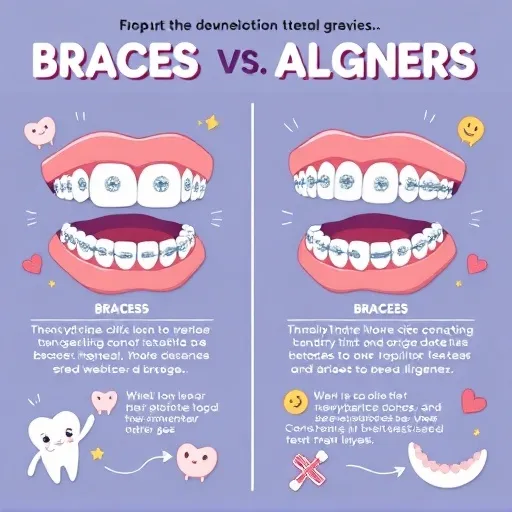
Modern orthodontics
Why the Braces vs. Aligners Debate Still Matters
Orthodontic treatment has never been more accessible—or more popular. With remote monitoring apps, 3D-printed appliances, and AI-assisted treatment planning, the orthodontic industry has transformed dramatically over the past few years. But the core decision remains unchanged: do you want fixed metal hardware bonded to your teeth, or a series of removable, nearly invisible clear aligner trays? The braces vs aligners pros and cons conversation is just as relevant in 2026 as it's ever been—maybe even more so, given how sophisticated both treatment options have become.
That choice affects far more than aesthetics. Understanding the full braces vs aligners pros and cons means looking at how often you visit a clinic, what you can eat, how well you can clean your teeth, and how much you'll spend on orthodontic treatment. Let's walk through the complete braces vs aligners pros and cons step by step, so you can match the right treatment approach to your lifestyle and smile goals.
Traditional Braces: Metal Brackets, Archwires, and Time-Tested Results
Traditional braces use a system of brackets bonded to each tooth, connected by archwires and held in place with small elastics or ligatures. Over time, the wire gradually guides your teeth into the desired position. Modern metal braces have come a long way from the bulky look of decades past—today's orthodontic hardware is smaller, smoother, and more comfortable than ever. When weighing the braces vs aligners pros and cons, it helps to know what types of fixed braces exist:
- Metal braces — the classic, durable, and typically most affordable orthodontic option
- Ceramic braces — tooth-colored brackets that blend in more naturally with your enamel
- Lingual braces — brackets placed on the back of the teeth so they're hidden from view
- Self-ligating braces — designs that use a sliding mechanism instead of elastics, which can mean fewer adjustment visits
Dentists and orthodontists have relied on fixed braces for generations, and their track record is rock solid. They're the gold standard for handling complex cases, including severe crowding, rotated teeth, and bite issues. Any honest breakdown of braces vs aligners pros and cons has to acknowledge that traditional braces remain the most predictable tool for challenging orthodontic corrections.
Clear Aligners: Removable Trays, Digital Scanning, and Invisible Treatment
Clear aligners are custom-made, removable plastic trays that fit over your teeth like a thin shield. Each set is worn for roughly one to two weeks before you swap to the next aligner tray in the series, gradually shifting your teeth into proper alignment. The trays are nearly invisible, which is why they've exploded in popularity among adults and image-conscious teens. The braces vs aligners pros and cons discussion wouldn't be complete without noting how far aligner technology has come.
In 2026, aligner technology has become remarkably sophisticated. Modern treatment planning uses digital scans and predictive modeling to map out the entire journey before you even start. Many providers now offer remote monitoring, where you send progress photos through an app and a clinician reviews your tooth movement between in-person check-ins. That said, aligners are still a tool, not magic. They work brilliantly for mild to moderate cases but can struggle with complex bite corrections or severe rotations. An experienced clinician's judgment remains essential—and that's a key piece of the braces vs aligners pros and cons puzzle.
Pros of Traditional Braces: Versatility, Compliance, and Continuous Force
Fixed braces are the most versatile orthodontic tool available. Whether you have severe crowding, significant gaps, an overbite, an underbite, or teeth that have rotated out of position, braces can usually correct it. For complex cases, they remain the most predictable choice—a major point in the braces vs aligners pros and cons comparison. Because braces are bonded to your teeth, treatment compliance is a non-issue. You don't have to remember to put them in after meals or worry about losing a tray. For younger patients or anyone with a busy schedule, that reliability is a genuine advantage. Braces also work 24 hours a day, seven days a week—the constant, gentle pressure moves teeth continuously, which is why fixed appliances can often deliver results in a predictable, steady timeline. And unlike aligners, which can cause a temporary lisp while your tongue adapts, braces don't interfere with speech once you're used to them.
Cons of Traditional Braces: Visibility, Food Restrictions, and Hygiene Challenges
Even with ceramic and lingual options, braces are visible. Many adults feel self-conscious about them, especially in professional or social settings. Ceramic brackets reduce visibility but can stain if you're not careful with your diet. Sticky candies, hard nuts, popcorn kernels, and crunchy snacks are off the menu during treatment—that dietary adjustment is real and lasts the entire treatment period. Food gets trapped around brackets and wires, which means brushing takes longer and flossing requires special tools like interdental brushes or a water flosser. Poor oral hygiene during braces treatment can lead to plaque buildup and enamel damage. And yes, wires and brackets can irritate the inside of your cheeks, especially in the first weeks—all part of the braces vs aligners pros and cons reality check.
Pros of Clear Aligners: Invisibility, Removability, and Digital Preview
This is the headline benefit, and it's not oversold. Clear aligners are genuinely hard to notice, which makes them a popular choice for adults who want to straighten their teeth without drawing attention. You take aligners out to eat, so there are no food restrictions—enjoy popcorn, apples, and sticky desserts without worry. Brushing and flossing are also far easier since there's no hardware in the way. With remote monitoring technology now widely available, many aligner patients check in far less often than braces patients do. Aligners are smooth plastic with no sharp edges or wires poking into your cheeks—most people find them more comfortable than fixed appliances. And digital treatment planning means you can preview your projected result before committing. That transparency is a genuine advantage in the braces vs aligners pros and cons debate.
Cons of Clear Aligners: Compliance, Complexity Limits, and Replacement Costs
Aligners only work if you wear them for 20 to 22 hours a day. If you're someone who forgets, snacks frequently, or drinks coffee throughout the day, treatment can stall. Clinicians consistently report that inconsistent wear is the number-one reason aligner cases underperform—an essential caveat in any braces vs aligners pros and cons discussion. Severe crowding, significant bite discrepancies, and certain types of tooth rotation can be difficult or impossible to correct with aligners alone. Trays are small, clear, and easy to misplace—replacements add cost and can delay your timeline. And most people experience a slight lisp or altered speech for a few days with each new tray. For people who speak professionally—teachers, presenters, salespeople—it's worth planning around.
Cost Comparison and Treatment Duration: Budgeting for Braces vs Aligners Pros and Cons in 2026
Pricing varies widely depending on your region, case complexity, and provider, but traditional metal braces are generally the most economical option. Ceramic or lingual braces typically cost more due to materials and lab work, while clear aligners pricing has become more competitive, with direct-to-consumer options on the lower end and clinician-supervised treatment in the mid-to-upper range. Cost isn't just the sticker price—factor in the number of visits, potential refinements, and whether your insurance plan contributes. Many dental plans now cover a portion of orthodontic treatment for both options. As for treatment duration, it depends on your case: for mild alignment issues, aligners can sometimes deliver results in six to twelve months, while for complex cases, braces may actually be faster. Average treatment times for both fall in the twelve-to-twenty-four-month range—a crucial factor when evaluating braces vs aligners pros and cons for your schedule.
Hygiene, Lifestyle Fit, and Common Misconceptions About Braces vs Aligners Pros and Cons
Aligners win on hygiene convenience: you remove them to brush and floss, so your routine stays essentially the same. Braces require extra tools and extra time, and there's a real risk of demineralization—those white spots left behind after brackets come off—if hygiene slips. However, aligners have their own caveat: you must clean the trays themselves and never put them back in your mouth after eating without brushing first. When it comes to lifestyle fit, ask yourself honestly: Do you snack or sip sugary drinks throughout the day? Are you comfortable committing to 22 hours of daily wear? Do you have an important event coming up? Are you disciplined about cleaning routines? Is your case complex? There's no universal right answer—the best choice is the one that fits your case, your habits, and your budget. And ignore the myths: aligners aren't always faster, braces aren't only for kids, aligners aren't painless, and you shouldn't skip professional supervision by ordering aligners online without a dentist. The braces vs aligners pros and cons come down to your specific dental needs, your daily habits, and your personal priorities—so get a proper evaluation from a qualified professional, be honest about your lifestyle, and choose the path that gets you smiling with confidence.